How to get a website for your food truck
A UK guide from someone who trades. I run a pizza stall, I built its website myself, and it has brought me bookings I would never otherwise have had.
In short, there are three ways to get one: a website builder from about £11.50 a month, a designer, or a site made for traders, such as WebPitch at £10 a month. Many traders use a hire site instead, and this guide covers those too.
Somebody is planning a wedding, or a works do, or a fortieth, and they want food there. They’ve never heard of you. So they do what everyone does, and search.
One of two things comes back. Your website, with you on it and nobody else. Or a listing site with every caterer for miles around on one page, and you somewhere among them.
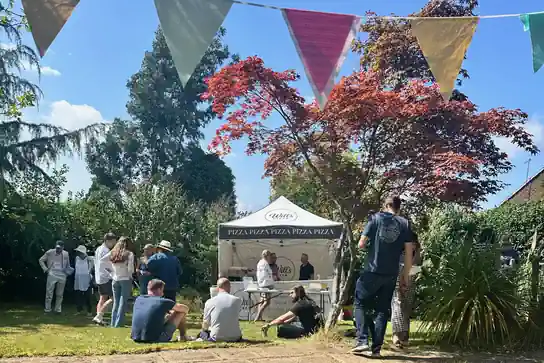
I know which I’d rather be, because I’ve seen it work. Once the site for Will’s Pizza was up, people started finding me by searching for pizza catering in the area I serve. Strangers, typing what they wanted into Google and landing on me. I’ve had bookings I would never have had without it.
So this guide isn’t going to argue about whether you need a website. I’ve done that in Does a food truck need a website? This one is about how to get one in the UK, what it costs in pounds, and what to put on it. All of it applies whether you serve from a food truck, a trailer or a gazebo.
One thing before you read on: I make WebPitch, which is one of the options below. I’ve tried to be straight about the others, and I’ve said where I haven’t used something myself.
Ways to get a food truck website, and what they cost
There are fewer than you’d think. Prices were checked on 22 November 2026, and they are what you pay month by month.
Hire and listing sites
Plenty of traders sign up to a hire site before they ever think about a website. Poptop, Togather and Add To Event are three of the big ones. They list caterers and send you enquiries from people planning events. I’ve barely used them, I haven’t needed to. So this is how they charge, not a review.
They make their money when you get work. Poptop takes 12% of the value of every booking, and its terms say you mustn’t suggest to a client that they book you outside Poptop. Togather takes up to 15%. Add To Event takes no commission. You buy credits instead, and spend them each time you send a quote.
Use them if they bring you work. But see them for what they are. You’re one row in somebody else’s list, next to the people you’re competing with. Your own website doesn’t charge commission, and the customers who come through it are yours, not gated behind someone making one.
A website builder
Wix and Squarespace are the names you’ll have seen advertised. You pick a template, move things around until it looks right, and pay by the month: Squarespace from £16, Wix from about £11.50 plus VAT. A domain name is on top of that.
I’ve used website builders before. They’re capable things, but to get the most out of one you really have to know what you’re doing. Does it look right on a phone? Are your events published in a way Google can understand? Is the SEO, the work that gets you found on Google, done right? A builder gives you the tools and leaves the answers to you.
Then there’s how it looks. In practised hands a builder turns out a professional site. In anyone else’s it tends to turn out something home-made, and customers can tell.
And none of it is made for what we do. A builder is a tool for making any website for any business. It doesn’t know what a market is. It has no idea that you’re somewhere different every Saturday, or that you have a menu, or that someone might want to book you for their fortieth. You build all of that yourself, out of blank boxes.
A designer
Or you pay someone to build it for you. You’ll get something made for your business, and you won’t have to learn a builder. You’ll also pay a good deal more than any monthly price on this page, and wait while it’s built. Ask what happens afterwards, when something needs changing.
WebPitch
I built my own site because nothing else did what a trader needs. WebPitch is that site, made so any trader can have one.
A builder doesn’t know what a market is. WebPitch does. There’s a place for where you’ll be next, a place for your menu, and a booking form for the weddings and the birthdays, all there from the start. The site is yours alone: no other traders on the page, and no commission on anything. It looks professional on a phone, which is where your customers are, and every page is set up to be found on Google.
£10 a month, after 3 months free. Leave whenever you like.
Your site lives at yourname.webpitch.co.uk, or on a domain name of your own from £10 a year.
What to put on it
Whichever way you go, the same few things do the work.
Say what you sell and where, in plain words. This is the one that got me those bookings. Nobody searches for “an unforgettable food experience”. They search for “pizza catering Stockport”. If your site says what you make and names the places you cover, in the words a customer would type, Google can match you to them. If it doesn’t, it can’t.
Say where you’ll be next. You’re somewhere different every week. Put the dates and the places on the site, and keep them right.

Show the menu, with prices. People like to choose before they reach the front of the queue.
Make it easy to book you. My customers use the contact form on my site. It’s nothing clever: a form that lands in my email. But notice what happens before anyone fills it in. They look around first, and a site that looks cared for tells them they’re dealing with a professional. That is what gives someone the confidence to trust you with their wedding.
Two things the American guides leave out
Nearly every guide to food truck websites is written in America, by a company selling a builder. The best-known ones mention neither of these.
Allergens. If you take orders by phone or online, the law says allergen information has to be available before the customer orders, and again when they get their food. At the truck or the stall you can give it in writing or just tell people, as long as there’s a sign saying how to ask. The official best-practice advice goes a step further: put it in writing on your online menu, or one click away from it. I’m not a lawyer, so read the government’s allergen guidance for yourself.
Your food hygiene rating. Trucks and stalls are rated like any café. In Wales and Northern Ireland you have to display your rating by law. In England it’s voluntary, and Scotland has its own scheme. Nobody makes you put it on your website. But if you’ve earned a five, why wouldn’t you?
Get a proper address
Your site needs an address, and the best one is a domain name of your own: churrohatch.com, not a long string on somebody else’s site. It’s short enough to paint on the truck and print on the boxes.
The trap is the first-year price. IONOS and Fasthosts will both sell you a .co.uk for £1, then renew it at £10 and £12.83 a year plus VAT. A .com renews at £15 and £16.92. None of that is unreasonable. Just look at the renewal price before you buy, because that’s the one you’ll be paying.
Help Google find you
A new website doesn’t appear in Google the day it goes up. It takes weeks, sometimes months, and that’s normal. Three things move it along.
Get linked to. Every market you trade at and every event you’ve done has a website. Ask them to link to yours. Links from real, relevant sites are a large part of how Google decides you’re worth showing.
Look into a Google Business Profile. That’s the panel with the map and the reviews beside the search results. Google allows one for a business that “travels to customers where they are”, with your address hidden and the areas you serve listed instead. Its rules don’t mention food trucks or market stalls by name, so read them before you apply.
Put the address everywhere. On the truck, the gazebo, the menu board and every box you hand over. The people who liked your food are the ones most likely to look you up.